
DEVISING as composition
Building Performance Without a Script
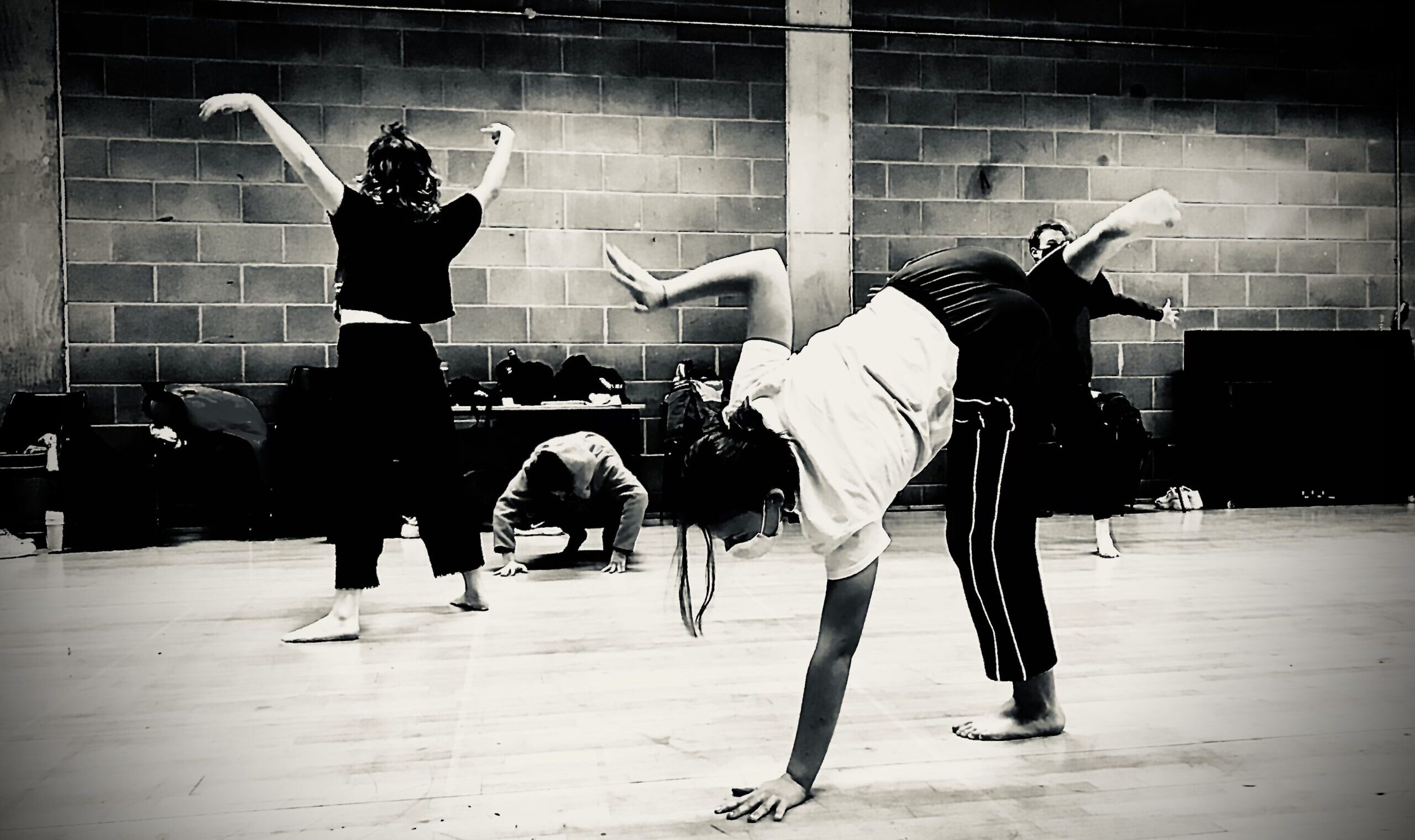
This workshop is an opportunity to delve deep into our methodology. We treat devising not as an open-ended process of improvisation, but as the practice of theatrical composition.
We offer two levels:
– INTRODUCTION TO DEVISING AS COMPOSITION: for performers new to devising who want to experience the process of building original work without starting from a pre-written play.
This session is about creative agency: helping actors discover how to generate, shape, and perform original work, while gaining a deeper understanding of ensemble-making, physical storytelling, and the dramaturgical processes behind devised theatre. You’ll learn:
How to generate performance material from a multitude of texts, images and sounds
How to structure and refine raw ideas into a coherent performance
How to move from instinct and physical experimentation to a score.
Ideal for: Actors trained mainly in scripted work • Performers interested in physical theatre and non-text-based approaches • Emerging artists who want to make their own work but do not know where to begin • Drama students and early-career performers.
– ADVANCED COMPOSITION AND ENSEMBLE CREATING: For more experienced performers interested in developing their ability to compose materials into a coherent ensemble dramaturgy.
Composition is the craft of organising movement, space, rhythm, image and dramatic action into meaningful theatrical form. The result is a repeatable creative methodology that enables artists to devise work that is imaginative, disciplined and performance-ready.
Participants learn how movement, space, rhythm, image and dramaturgical thinking can be composed into performances with clarity, precision and artistic rigour.
Ideal for: Professional actors • Directors • Theatre-makers • Advanced theatre students
|
COMPOSE THE ENSEMBLE |
COMPOSE THE |
COMPOSE THE PERFORMANCE |
|
Physical training |
Structured improvisation |
Dramaturgical frameworks |
|
States of Tension |
Movement and spatial composition |
Shaping theatrical material |
|
Presence and responsiveness |
Working with image, objects and rhythm |
From fragments to performance |
WORKSHOP STRUCTURE
1. Introductions & Ensemble Building
Participants introduce themselves and share their performance background and interests.
The session begins with physical warm-ups, group exercises, and ensemble tasks designed to build trust, focus, responsiveness, and play.
2. What Is Devising?
An introduction to devised theatre and the many forms it can take.
Participants explore how performance can emerge from images, themes, personal experience, movement, text fragments, improvisation, and research rather than from a finished script.
We also look at different ways artists generate material collectively.
3. Physical Theatre as a Creative Tool
An exploration of how the body can be used to create meaning, atmosphere, character, and narrative.
Participants work with movement-based exercises, spatial composition, rhythm, gesture, and non-verbal storytelling.
The aim is to help actors move beyond naturalism and discover how physical vocabulary can generate theatrical material.
4. Improvisation & Generating Material
Participants are guided through practical devising tasks in pairs, small groups, and as a whole ensemble.
These may include image work, thematic improvisations, physical scores, text and movement combinations, and responding to prompts or source material.
The focus is on experimentation, risk-taking, and discovering what material begins to emerge.
5. Introduction to Dramaturgy
A practical introduction to dramaturgy within devised work.
Participants explore how to identify themes, connections, repetitions, tensions, and possible structures within the material they have created.
This section looks at how a piece begins to take shape and how dramaturgical thinking helps transform improvisation into performance.
6. Shaping a Devised Piece
Participants work on selecting, editing, and arranging material.
They explore questions such as:
What belongs in the piece?
What is the audience meant to experience?
What holds the work together?
How do transitions, rhythm, contrast, and visual composition help create structure?
This section introduces the journey from workshop material to performance draft.
7. Sharing & Reflection
Participants share short devised sequences created during the session.
The workshop ends with discussion and reflection on process, collaboration, authorship, and the possibilities of making original work as an actor.
General Information
- Sessions can be booked as:
– A one-off 3-hour session
– A series of sessions or full day workshop - Ideal number is 10-15 participants (but we can accommodate bigger groups if discussed when booking)
If you’re a drama or acting department and would like to book a workshop in your premises, email Nada at legalalienstheatre@legalaliens.org. or click below
we are
LegalAliens Theatre
All rights reserved@LegalAliens Theatre
Privacy Policy